
A Guide for Landscape Architects & Garden Designers: Choosing the Right Willow Structure for Your Project
Designing bespoke willow structures for landscapes, gardens, natural play spaces and public realm projects across the UK.
COMMISSIONSCULPTUREGARDEN DECORGUIDE
7/17/20264 min read
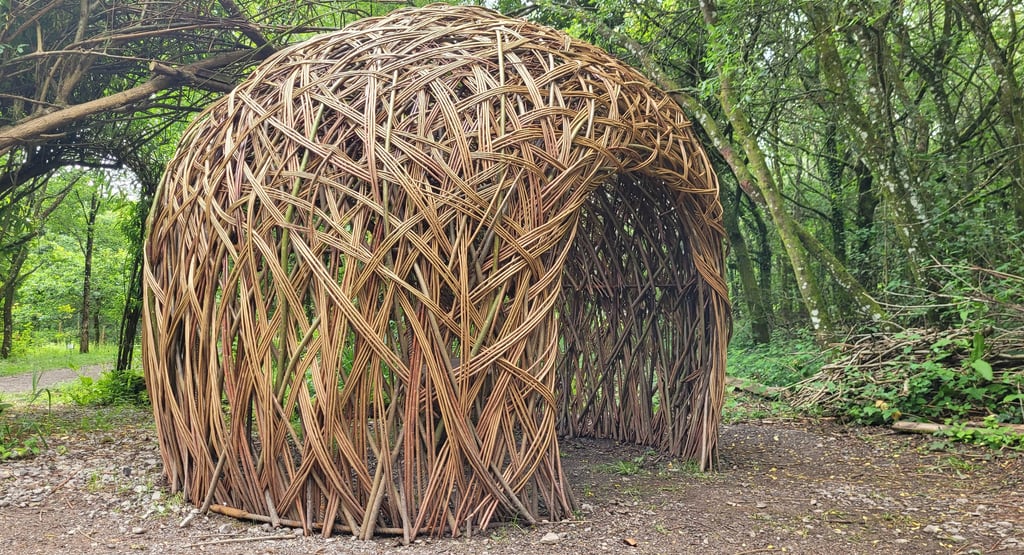
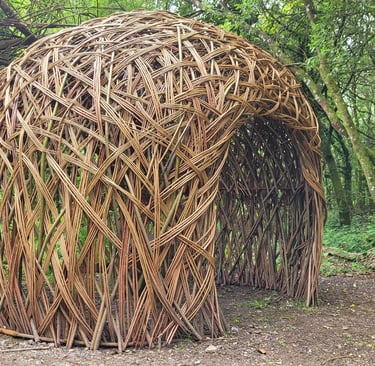
As landscape architects and garden designers increasingly seek sustainable, nature-led materials, willow has become one of the most exciting and versatile options available. Whether you're designing a contemporary private garden, a natural play area, a National Trust property or a large public park, handcrafted willow structures can create spaces that invite exploration, encourage biodiversity and become memorable landmarks within the landscape.
At Hanmade Willow Studio, I work collaboratively with landscape architects, garden designers, play consultants, local authorities, schools, visitor attractions and contractors to create bespoke woven willow structures that complement the wider design vision.
Every project is unique. Some require a dramatic architectural feature, while others need a subtle natural element that quietly blends into its surroundings. Understanding the different types of willow and construction methods available is often the first step in deciding which solution is right for your project.
Why More Designers Are Choosing Willow
Landscape architecture and garden design have evolved considerably over the past decade. Today's projects are expected to deliver far more than attractive planting schemes. They need to improve wellbeing, support biodiversity, encourage play, celebrate local craftsmanship and minimise environmental impact.
Willow responds beautifully to all of these objectives.
Its natural appearance allows structures to sit comfortably within both traditional and contemporary landscapes. Unlike manufactured play equipment or imported decorative features, willow develops character as it ages, becoming part of the landscape rather than simply sitting within it.
Whether used in a private garden, school grounds or a public park, woven willow creates a softer, more immersive environment that encourages people to interact with nature.
Choosing the Right Willow for Your Project
One of the most common questions I receive is:
"Which type of willow should we use?"
The answer depends entirely on the purpose of the structure, the desired appearance and how long it's expected to remain in place.
Dried Brown Willow (Black Maul)
For many permanent sculptures and architectural features, dried Black Maul willow is the preferred material.
Its rich brown colour provides a warm, natural finish that complements planting and timber beautifully. Once woven, it creates elegant flowing lines and allows for intricate craftsmanship that isn't possible with heavier materials.
Dried willow is ideal for:
Feature domes
Garden structures
Sculptures
Decorative screening
Seating
Arches
Event installations
Public art
Because it has already been dried, it remains stable and won't begin growing once installed. It can also be treated with linseed oil to improve weather resistance and longevity.
Living Willow
Living willow offers a completely different experience.
Rather than remaining static, it continues to grow after installation, producing fresh leaves each spring and gradually thickening over time. This creates beautiful seasonal structures that evolve with the landscape.
Living willow works particularly well for:
Schools
Forest schools
Community gardens
Educational settings
Wildlife projects
Children's play spaces
Garden tunnels
Living domes
Outdoor classrooms
It does require ongoing maintenance. Annual pruning is essential to maintain the intended form, and the site must offer suitable soil conditions and sufficient moisture during establishment.
For projects seeking an ever-changing landscape feature, living willow can be an exceptional choice.
Soaked Weaving Willow
Some projects benefit from using soaked weaving willow, where dried willow is rehydrated before weaving.
This process restores flexibility, allowing more complex weaving patterns and tighter curves than would otherwise be possible.
Soaked willow is often selected when creating:
Fine woven panels
Traditional basket-style weaving
Bee skeps
Decorative architectural details
Complex sculptural forms
Its flexibility gives far greater freedom during construction while maintaining the beautiful finish associated with traditional willow craftsmanship.
Willow Sticks for Structural Frameworks
For smaller structures, I often use thicker willow sticks as the primary framework.
These provide excellent natural strength while maintaining the entirely organic appearance many designers are looking for.
This approach works particularly well for:
Small domes
Obelisks
Plant supports
Children's dens
Garden features
Decorative structures
Using willow sticks throughout allows the finished sculpture to remain completely natural without introducing additional materials where they aren't required.
When Metal Frames Are the Better Solution
As structures increase in scale, engineering becomes increasingly important.
Large domes, tunnels, walk-through sculptures and public installations often experience significant wind loading and repeated public use. In these situations, a carefully fabricated galvanised or powder-coated steel frame provides additional structural integrity while remaining hidden beneath the woven willow.
Metal frameworks allow for:
Larger spans
Greater durability
Increased public safety
Consistent structural geometry
Longer design life
Easier installation
Compliance with engineering requirements where specified
The willow then becomes the beautiful handcrafted skin wrapped around a robust structural framework.
This combination offers the best of both worlds—traditional craftsmanship supported by modern engineering.
Collaborative Design for Landscape Professionals
Every landscape architect and garden designer approaches projects differently.
Some arrive with fully developed CAD drawings and construction details, while others simply have an inspiring concept sketch that needs developing into a practical willow structure.
I enjoy working collaboratively throughout the design process, helping translate ideas into woven forms that are both visually striking and structurally appropriate.
Depending on the project, I can advise on:
Suitable willow materials
Construction methods
Structural options
Weaving styles
Installation requirements
Maintenance expectations
Longevity
Integration with planting schemes
Bespoke dimensions
Budget considerations
My aim is always to ensure the finished structure complements the wider landscape rather than becoming an isolated feature.
Designed for Natural Play, Public Spaces and Gardens
Every woven structure is made specifically for its setting.
Projects may include:
Willow domes
Bee skeps
Garden pavilions
Entrance features
Sculptural seating
Wildlife sculptures
Storytelling spaces
Living classrooms
Garden arches
Tunnels
Feature screening
Plant supports
Obelisks
Event installations
Contemporary public art
Because every commission is bespoke, there are very few limitations beyond imagination and practical engineering.
Why Work with Hanmade Willow Studio?
As well as being a professional willow artist, I understand the collaborative nature of design and construction projects.
I enjoy becoming part of the wider project team, working alongside landscape architects, garden designers, contractors and clients to deliver handcrafted willow structures that are beautiful, practical and appropriate for their environment.
Whether the project is a private courtyard, a National Trust property, a visitor attraction or a large public park, every commission receives the same attention to detail and commitment to craftsmanship.
From the first conversation through to installation, the focus is always on creating something that feels completely at home within its landscape.
Let's Create Something Extraordinary
If you're a landscape architect, garden designer, play consultant, developer, contractor or local authority, I'd love to discuss your project.
Whether you're looking for a living willow tunnel, a permanent woven dome, sculptural garden features or a large engineered installation, every commission begins with a conversation about your site, your vision and the experience you want people to have.
Together, we can create willow structures that are not only functional but become defining features of the landscapes they're designed for.
Hanmade Willow Studio
Bespoke willow sculptures and outdoor structures handcrafted in South Wales for gardens, landscapes, public spaces, events and visitor attractions. Working with private clients, garden designers, landscape architects and organisations across Wales and the UK.
Bespoke Commissions | Willow Sculpture | Outdoor Structures | Landscape Projects
Vale of Glamorgan, South Wales, UK
© 2025 Hanmade Willow Studio. All rights reserved.