
Living Willow vs Dried Willow: Which Is Right for Your Project?
Compare living and dried willow for sculptures and outdoor structures. Learn about appearance, growth, maintenance, longevity and which willow is best for your project.
GUIDE
8/19/20263 min read

Living Willow vs Dried Willow: Which Is Right for Your Project?
Willow is an incredibly versatile natural material for outdoor sculpture, structures and garden design, but not all willow behaves in the same way.
One of the first decisions when planning a willow project is whether to use living willow or dried willow.
The two approaches can create very different results. Living willow continues to grow after planting, while dried willow provides a more permanent sculptural form that stays essentially the same shape once constructed.
The right choice depends on the location, design, intended use and how much ongoing maintenance you want the structure to require.
What Is Living Willow?
Living willow is made using fresh willow rods that are planted directly into suitable ground. Because willow can root from cuttings, the rods can establish themselves and continue growing after installation.
Once established, the willow produces leaves and new shoots each year.
These new shoots can be pruned and, where appropriate, woven back into the structure as it develops.
Living willow is particularly suited to structures such as:
Arches
Domes
Tunnels
Dens
Natural play structures
Living screens
Garden structures
The finished piece becomes part of the landscape rather than simply sitting within it.
What Happens to a Living Willow Structure Over Time?
One of the attractions of living willow is that it changes throughout the year.
In spring and summer, new growth and foliage create a much greener and more organic structure. During autumn and winter, the leaves fall and the underlying woven framework becomes more visible again.
Living willow can grow rapidly when conditions are suitable, so it needs ongoing management.
New growth may need to be pruned, tied or woven back into the structure to maintain its intended form.
This means that a living willow structure is not completely maintenance-free. It is a living piece of landscape design that needs to be cared for as it develops.
What Is Dried Willow?
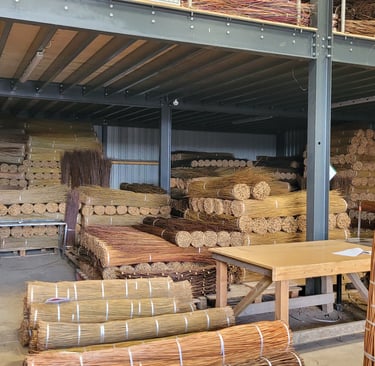
Dried willow has been harvested and allowed to dry before being used for weaving or sculpture.
Unlike living willow, it does not root or continue growing after installation.
This makes it particularly useful where you want the finished shape and woven detail to remain consistent.
Dried willow can be used for:
Outdoor sculpture
Animal and wildlife sculpture
Arches
Moon gates
Domes
Dens
Screens
Decorative structures
Event installations
Garden features
Living Willow or Dried Willow: Which Looks Best?
There isn't one correct answer.
Living willow creates a softer, changing and more natural appearance as the structure develops.
Dried willow gives you much greater control over the finished sculptural form and allows the weave to remain visible throughout the year.
For a garden designer or landscape architect, the choice can therefore depend on whether the willow is intended to behave as a living landscape element or as a fixed sculptural feature.
Which Requires More Maintenance?
Living willow generally requires more ongoing maintenance because it continues to grow.
Depending on the design, this can include:
Pruning new growth
Removing unwanted shoots
Reweaving new growth
Maintaining the intended shape
Managing growth around paths and openings
Dried willow doesn't grow, but outdoor structures still need to be inspected and maintained.
Weather exposure, moisture, location and construction all affect the condition of dried willow over time.
Which Should You Choose?
For a living, evolving feature that becomes part of the planting scheme, living willow can be an excellent choice.
For a sculpture or structure where you want the form and woven detail to remain consistent, dried willow is usually more appropriate.
There are also projects where different materials or construction techniques can be considered together.
I can advise on the most appropriate approach based on your site, design, dimensions and intended use.
Planning a Willow Project?
If you're unsure whether living or dried willow is right for your project, get in touch.
You can send photographs, drawings, dimensions or a landscape plan and I can help you consider the most suitable approach.
Hanmade Willow Studio
Bespoke willow sculptures and outdoor structures handcrafted in South Wales for gardens, landscapes, public spaces, events and visitor attractions. Working with private clients, garden designers, landscape architects and organisations across Wales and the UK.
Bespoke Commissions | Willow Sculpture | Outdoor Structures | Landscape Projects
Vale of Glamorgan, South Wales, UK
© 2025 Hanmade Willow Studio. All rights reserved.